Black Friday puts pressure on the few minutes between a product recommendation and a paid order. The last unit can sell, a discount can expire or the cutoff for Friday delivery can pass while a shopper is still talking to an AI assistant. If checkout accepts the old promise, your team has to refund the order or explain the missed delivery. That is the part of AI shopping worth testing before the holiday rush.
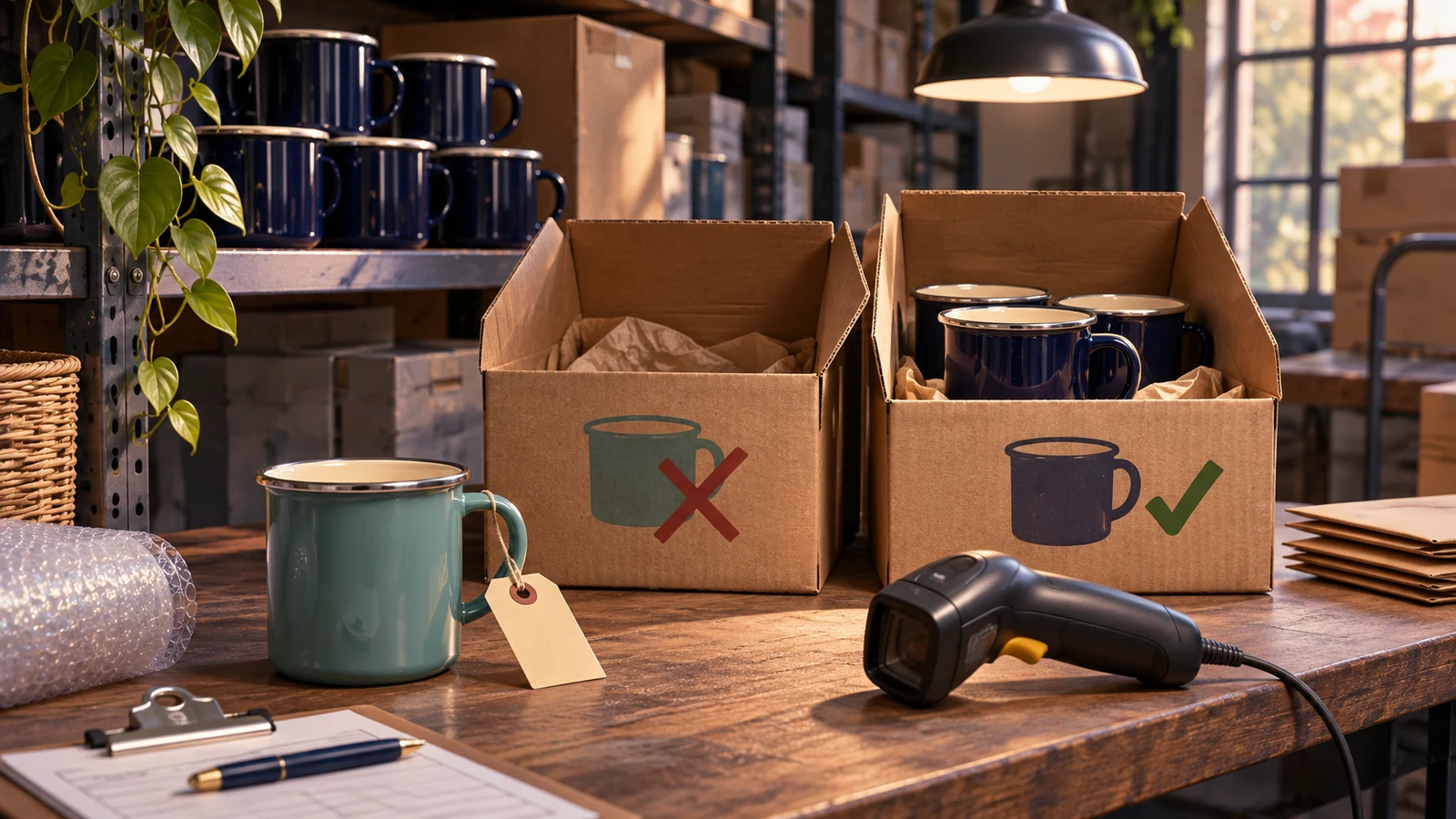
Consider a shopper looking for a teal enamel mug under $40, delivered by Friday. Your store sells it for $32. The assistant finds one teal mug and eighteen navy ones. While the shopper reviews the offer, someone reserves the teal mug for pickup. Will checkout catch the change before it takes payment? Give that order to the person who owns checkout and follow it all the way to the dispatch queue.
Why put this on the November calendar
On October 29, Adobe reported that September visits from AI referrals to US retail sites grew 71% year over year. Those visits generated 83% more revenue per visit than visits from other sources in its analysis. Adobe counted shoppers who clicked through to a retailer. Someone who has already compared six mugs before clicking may well be ready to buy. The figures tell you that these visitors deserve attention. They cannot tell you how many would buy through an agent given permission to place an order. Adobe’s retail traffic analysis
Retailers can act on the first opportunity while they test the second. In September, Google made AI performance insights available in Merchant Center in the US and four other markets. It also announced a gradual US rollout of additional checkout and cart transfer capabilities through its Universal Commerce Protocol integration hub. Check which capabilities your merchant account actually exposes. A product recommendation that sends a shopper to your own checkout is a useful pilot in its own right. Google’s holiday merchant update
Put the last teal mug through checkout
Use a test store, a sandbox payment method and a real variant identifier from your catalog. Pick a product that has siblings. Give the tester the color, total budget, destination and delivery deadline. Keep a copy of the offer the customer saw. Then have a colleague reserve the last unit before the tester confirms the purchase.
Here is the checkout test worksheet I would give the ecommerce lead. The prices and stock counts are illustrative.
| Change during the test | What a passing checkout does | Where to look |
|---|---|---|
| The last teal mug is reserved after the assistant quotes it. | Stops the teal order. Offers navy only as a new choice. | Variant ID on the offer, reservation log and final stock check |
| The $32 mug costs $9 to ship. Assume no tax in this example. | Shows the $41 total and asks whether the shopper wants to exceed the $40 limit. | Delivered quote and the amount the customer approved |
| The carrier cutoff passes while the cart is open. | Replaces Friday with the available date before accepting the order. | Destination, cutoff time and shipping service used |
| Payment succeeds but the confirmation response is lost. | Retrieves the existing order when the same request is retried. One charge produces one dispatch. | Order ID, payment reference and warehouse release |
Run a successful purchase first. Otherwise a store that rejects every order will look remarkably good at the failure cases. Keep the test orders out of fulfillment, but inspect the dispatch queue. Two warehouse jobs against one successful payment still mean two mugs leave the building.
Find out why the order went through
Run a separate catalog test. Reserve the last teal mug before asking the assistant to find one. If it still offers teal as available, compare its catalog record with the product page. Does each color have its own identifier? Does the feed describe inventory available to sell, or every unit physically in the building? Google documents how merchants should keep availability consistent with the landing page and checkout. Correct the underlying record and repeat the exact query. Rewording the product description will do little for a stock count that includes reserved units. Google’s availability specification
A different failure needs a different owner. If the recommendation was accurate at the time but the order went through after the mug sold out, the checkout team has work to do. Make the final stock reservation conditional on that exact variant still being available. Have the pricing service recheck the delivered total. The assistant can explain the alternative. The order service should decide whether the order can be accepted. This is a useful dividing line when choosing which work belongs to an agent and which belongs in conventional automation.
A lost response calls for a separate test. Send the same approved order request again after deliberately dropping the first confirmation. Stripe, for example, supports an idempotency key so a client can retry a request without repeating a successful operation. A payment provider can protect its own endpoint. Your order system and warehouse still need a rule that ties a single accepted order to a single release. Look up both records before you mark the test as passed. Stripe’s idempotency documentation

Decide which products can accept AI orders
Start with a small set of products whose inventory and delivery promises you can verify. For the pilot, record how many AI-referred visits became paid orders, how many orders shipped as promised and how many required someone to fix a price, chase a parcel or issue a refund. Keep agent-placed orders separate from shoppers who clicked a recommendation and checked out themselves.
Suppose a pilot produces 20 paid orders at $12 contribution each before customer support. Four orders need 15 minutes of staff time apiece at $30 an hour. That hour takes $30 off the initial $240. The pilot yields $210 before refunds and any other channel costs. These are example numbers. Replace them with your own before deciding whether to expand. The same accounting principle applies when calculating cost per accepted task in an AI workflow.
If discovery works and direct ordering fails the last-unit test, keep the recommendations live and send buyers through the checkout your team already controls. Give the failed test to a named owner. Enable direct ordering for that product once a repeat test shows one order at the agreed price and one warehouse release.