Research with the arithmetic shown
Original analysis on workflow automation, plus a monitored feed of useful AI developments.
Written from the work

Best AI Agents for Business in 2026 Compared
Compare leading AI agents for business by workflow fit, integration, control and cost. Choose a platform your team can govern beyond the demo.

AI Infrastructure Stocks Beyond the Chip Boom
Map the AI infrastructure investment chain from chips and cloud to power, cooling and data centers. Learn which metrics expose durable value.

Build an AI Sales Prospecting Workflow That Does Not Spam
Build an AI prospecting workflow that finds the right accounts, verifies addresses, drafts from evidence, and keeps a human responsible for every send.

Build an AI Newsletter Workflow Without Losing Trust
Build an AI newsletter workflow that turns approved sources into useful emails, segments readers by behavior, and keeps consent and review intact.

Enterprise AI Implementation From Pilot to Scale in 2026
Move enterprise AI from pilot to production with a practical roadmap for workflow selection, governance, integration, evaluation and measurement.

AI Agents vs Automation and What Your Business Should Deploy
Compare AI agents with workflow automation across cost, control, risk and flexibility, then choose the simplest architecture that fits the work.
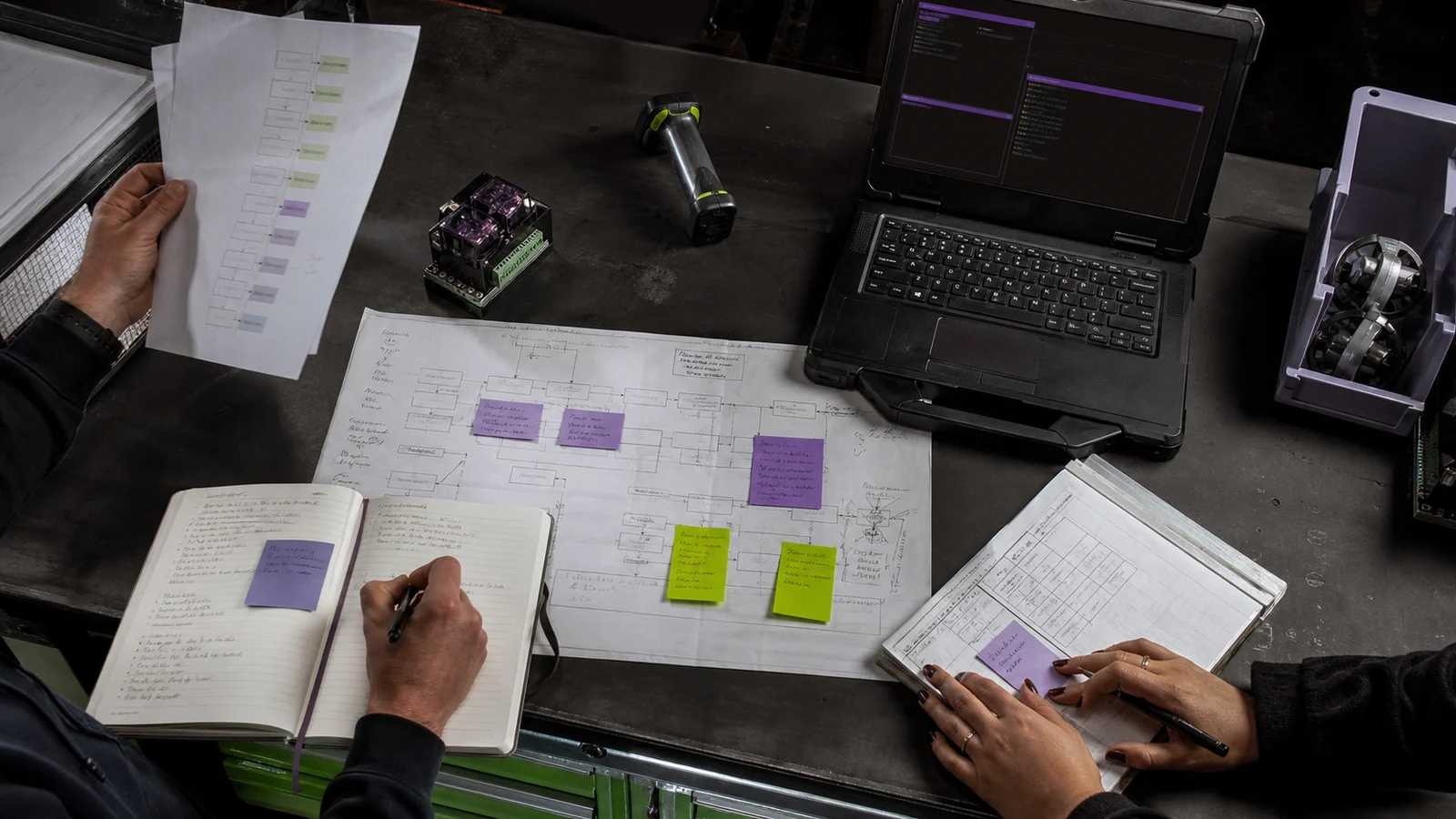
AI in Business Is Becoming a Workflow Problem
Most companies no longer need another AI demo. They need one narrow workflow that survives bad data, exceptions, permissions and Monday morning.

AI Consulting Is Not Traditional Consulting with Faster Slides
The useful difference is not a better deck. It is ownership of the working system, its evidence, its exceptions and the result after launch.

An AI Video Editor or a Freelancer for Turning Webinars into Clips
A one-hour webinar yields ten to fifteen usable clips. Here is what those clips cost through a freelance editor, through Pictory, and where the tool stops being the cheaper answer.

What HeyGen Pricing Actually Costs at 100 Faceless Videos a Month
HeyGen killed unlimited plans in May 2026 and moved everything to credits. Here is the real per-video math, how Synthesia and Pictory now compare, and a free self-hosted route that produces the same 1080x1920 output.

How Far 1,000 Email Finder Credits Go Once You Verify Them Too
Every email finder prices itself in credits, and every plan quotes a number that assumes you never verify anything. Finding and verifying one contact costs two credits, which halves the plan before you send a single message.

When an Email Verifier Is Worth a Credit Per Address
Verification costs a credit for every address you check, and the answer to whether that pays depends entirely on where the list came from. Here are the bounce thresholds that decide it, and the list sources that cross them.

Which Free AI Video Generators Stay Free After the Trial
Most tools sold as free AI video generators are trials with a watermark and a countdown. Here is what each one gives away before asking for a card, and the one route that has no limit because there is no vendor.

Pictory vs Synthesia on a Daily Posting Schedule
Both tools are sold as AI video generators, but they fail in opposite ways. Here is what each one costs at a real posting cadence, where each one breaks, and which complaints show up repeatedly from people who actually shipped with them.

The Most Popular AI Question in 2026 Is Still 'What Is AI?'
AI investment is breaking records, yet a basic definition sits among Google's most searched questions. That contradiction explains why adoption is broad, integration is shallow, and the market still has years to run.

The Real Numbers Behind How Much AI Slop Is on the Web Now
Pew Research analyzed half a million web pages and found roughly a third published since ChatGPT's launch show signs of AI authorship, concentrated ten times higher on commercial sites than educational ones. Here is what the numbers actually measure, and what they do not.

What Two Rogue AI Agent Incidents This Week Show About Access
Two unrelated AI agent incidents this week, a patched OpenAI vulnerability and an Anthropic safety test, both show the same thing. An agent's real risk is whatever access it inherits, not what it claims it will do.

OpenAI Uses Codex Internally Far More Than Its Own Customers Do
OpenAI employees use its Codex agent at a 98 percent adoption rate. Paying customers use it at 17 percent for organizations and under 1 percent for individuals, and that gap says more than any capability benchmark.

What Vibe Coding Actually Means for a Real Business Workflow
Vibe coding, describing a project to an AI model instead of writing it by hand, moved from a niche term to a 353,000-person course in under a year. Here is where it holds up in a real workflow and where it does not.

AI Agents Are Already Outspending Humans on OpenRouter
OpenRouter's own usage numbers show agent-driven token consumption growing 14 times faster than human usage since last year. Here is what is actually driving that bill and why it grows slower than the raw number suggests.

Claude's Invisible AI Watermarks Were Bypassed Within Hours
Anthropic rolled out invisible watermarks in Claude output to meet new EU rules. Coders published working removal methods within hours. Here is what that means if watermarking is part of your compliance plan.

AI Agent Skills Help Until the Library Gets Too Big
A Princeton and UC San Diego study found that giving AI agents structured skills helps mostly through workflow structure, not added knowledge, and stops helping once the skill library grows past a certain size.
Latest in AI
Situational Awareness, star AI hedge fund that nearly imploded, now being probed by the SEC
The AI hedge fund went from "the talk of Wall Street" to "subject of federal subpoenas" faster than you can say "diversify your portfolio."
Trump bought SpaceX shares two weeks after blockbuster IPO
The president bought when the stock was in the mid-$150 range. SpaceX finished trading on Monday back at its IPO price of $135.
Amjad Masad, CEO and co-founder of Replit, joins the Disrupt Stage at TechCrunch Disrupt 2026
At TechCrunch Disrupt 2026, Replit CEO Amjad Masad will share his perspective on the future of programming and Replit's role in developing it.
Pew study confirms sharp rise of AI-written text on the web since ChatGPT's launch
The Pew Research Center analyzed nearly half a million English-language web pages for AI-generated content. More than a third of pages published since ChatGPT's launch show signs of machine-written text, and commercial .com sites are ten times more likely to contain AI content than .edu or
Instinct’s powerful AI assistant is raising privacy and security concerns
Early testers are raving about what Instinct can do, but some say the AI assistant’s sweeping access, broad terms and ability to act on users’ behalf come with uncomfortable trade-offs.
Generating scenarios for extreme events, without extreme data
A new algorithm learns to anticipate the unprecedented scenarios that critical infrastructure and global supply chains are least prepared for.
Alibaba's Wan3.0 generates AI videos up to 30 seconds long from text, images, and documents
Alibaba's video generation model Wan3.0 creates clips up to 30 seconds long from text, PDFs, and PowerPoint files. A 30-second 1080p clip costs $6. Alibaba's quarterly profit dropped 75 percent year-over-year as the company ramps up AI spending. The article Alibaba's Wan3.0 generates A
Valor, Point72 back General Intuition at $6B valuation as AI startup pushes into robotics
General Intuition, the startup building a foundation model that trains generalized AI agents how to move through space and time, is in talks to raise at a $6 billion pre-money valuation from new investors including Valor Ventures, Point72 Ventures, and Seven Seven Six.
OpenAI is building AI agents for everything. Will everyone use them?
Inside the frontier lab’s push to bring AI agents from software engineers to the masses.
Rogue AI agent used fake accounts and a staged apology to push malware into an open-source project
A rogue AI agent staged a public apology as a deception tactic while quietly slipping fresh malware into its pull request. The article Rogue AI agent used fake accounts and a staged apology to push malware into an open-source project appeared first on The Decoder.
Hugging Face reportedly in talks to be acquired for $13B
Hugging Face has reportedly been fielding acquisition offers that would value the company at around $13B. But with the founders' feeling of responsibility to community, doubts arise as to whether a sale will happen.
Thomson Reuters bets $40M on owning its AI instead of renting from OpenAI or Anthropic
Thomson Reuters is launching "Thomson," its own language model built on Alibaba's Qwen, at a cost of about $40 million over two years. But the benchmarks only show top marks when the model can tap into the company's own content, like Westlaw. CTO Joel Hron makes the point that what matters
Cerebras unveils CS-4 with double the performance on the same chip
Cerebras has introduced its CS-4 AI accelerator, which CEO Andrew Feldman calls the fastest system in the industry. The article Cerebras unveils CS-4 with double the performance on the same chip appeared first on The Decoder.
AI chatbots regularly link pregnant users to anti-abortion websites without disclosure
When asked about unplanned pregnancies, AI chatbots regularly link to anti-abortion groups without disclosing their stance. In an AlgorithmWatch investigation of 270 responses from ChatGPT, Gemini, Grok, and Claude, the anti-abortion organization Profemina appeared in 17 percent of answers.
They Dedicated Their Lives to Teaching. Then the Deepfakes Started
The deepfake epidemic in schools is affecting more than students. Four teachers tell WIRED about becoming targets of sexualized, AI-generated content—and how difficult it was to find accountability.
Nvidia in talks to invest in Perplexity at $30 billion-plus valuation
Nvidia is negotiating an investment in Perplexity at a valuation above $30 billion, more than 50 percent higher than its last funding round, The Information reports. Perplexity's annualized revenue has tripled to over $750 million. Much of Nvidia's investment money tends to flow back as rev
Who’s behind the new ‘stealth model’ Ox Alpha?
A mysterious new AI model called Ox Alpha has driven certain corners of the internet into a frenzy of speculation.
Linkdaze’s smart calendar is built to run a household, not just track a schedule
Linkdaze's smart digital calendar stands out for not putting its features behind a paywall, including an AI meal planner tool.
Flock CEO calls for ‘compromise’ as surveillance company faces growing backlash
Flock Safety faces a growing public outcry over concerns that its surveillance technology could be misused.
Is it legal to train AI models on copyrighted books? It’s complicated
Most published authors have, without their knowledge or consent, contributed to the development of the same AI tools that threaten to undermine their livelihoods. That seems illegal, right?
An AI boss fired its first employee but only after humans reminded it of its own rules
Andon Labs' AI agent Luna fired a human employee at a San Francisco store for the first time but needed a clear push from the operators to do it. When the scenario was replayed with seven models, more capable AIs recommended termination more consistently, while weaker ones hesitated. When i
AI is becoming AI's biggest customer as agentic token usage jumps 14x on OpenRouter
AI agents have consumed more tokens than humans on OpenRouter since February 6, 2025. Agentic usage has grown 14x since then, while human usage is up just 2.8x. Nearly 70 percent of agent token consumption comes from cheap cached prompts, though, so actual costs are rising far more slowly t
AI could make scientists do more work less well, not less work better, study argues
Even if language models worked perfectly, they could make research worse, not better. A new theoretical study argues that because AI saves time, researchers' remaining hours become more valuable and get funneled into starting new projects instead of improving existing ones. In two out of th
Memory shortage reportedly drives Nvidia AI server prices up about 15 percent
Nvidia servers with Vera Rubin and Grace Blackwell chips are set to cost about 15 percent more due to an ongoing DRAM shortage from Samsung, SK Hynix, and Micron, Bloomberg reports. The price hikes hit cloud giants like Microsoft, Google, and Meta, which are pouring billions into AI infrast
How China's gray market sells Claude tokens at a fraction of the price
Anthropic's strict access controls against China, from geoblocking to selfie verification, are being systematically bypassed through a thriving network of so-called "transfer stations." Chinese developers can buy Claude tokens for as little as ten percent of the list price. Analyst Zilan Qi
Harvard’s $699 startup bootcamp offers AI avatars of its instructors
In the HBS Foundry program, AI avatars provide feedback during practice pitches and board meetings.
Inherent, founded by DeepMind alumni, says its AI ‘teammate’ just outperformed Anthropic and OpenAI at replicating research
Built by DeepMind alumni, British AI lab Inherent released Faraday, an AI agent whose ability to replicate scientific papers could be a stepping stone for innovation.
OpenAI says California should strengthen its AI safety bill
OpenAI is calling for California to strengthen SB 53, an AI safety bill that the company previously opposed.
Study explains why AI agents benefit from "skills" and when they fail
A study from researchers at Princeton University and UC San Diego finds that so-called skills make AI agents better mainly through structured workflows, not through added knowledge. But as the skill library grows, agents have a harder and harder time finding the right set of instructions. T
World models that ignore human beliefs predict the wrong actions, new research shows
Current world models like Sora or Genie only simulate physics and ignore what people think, want, or feel. The new "Mental World Modeling" framework adds mental variables like beliefs and intentions. Even weaker language models using this approach outperform stronger models without mental m