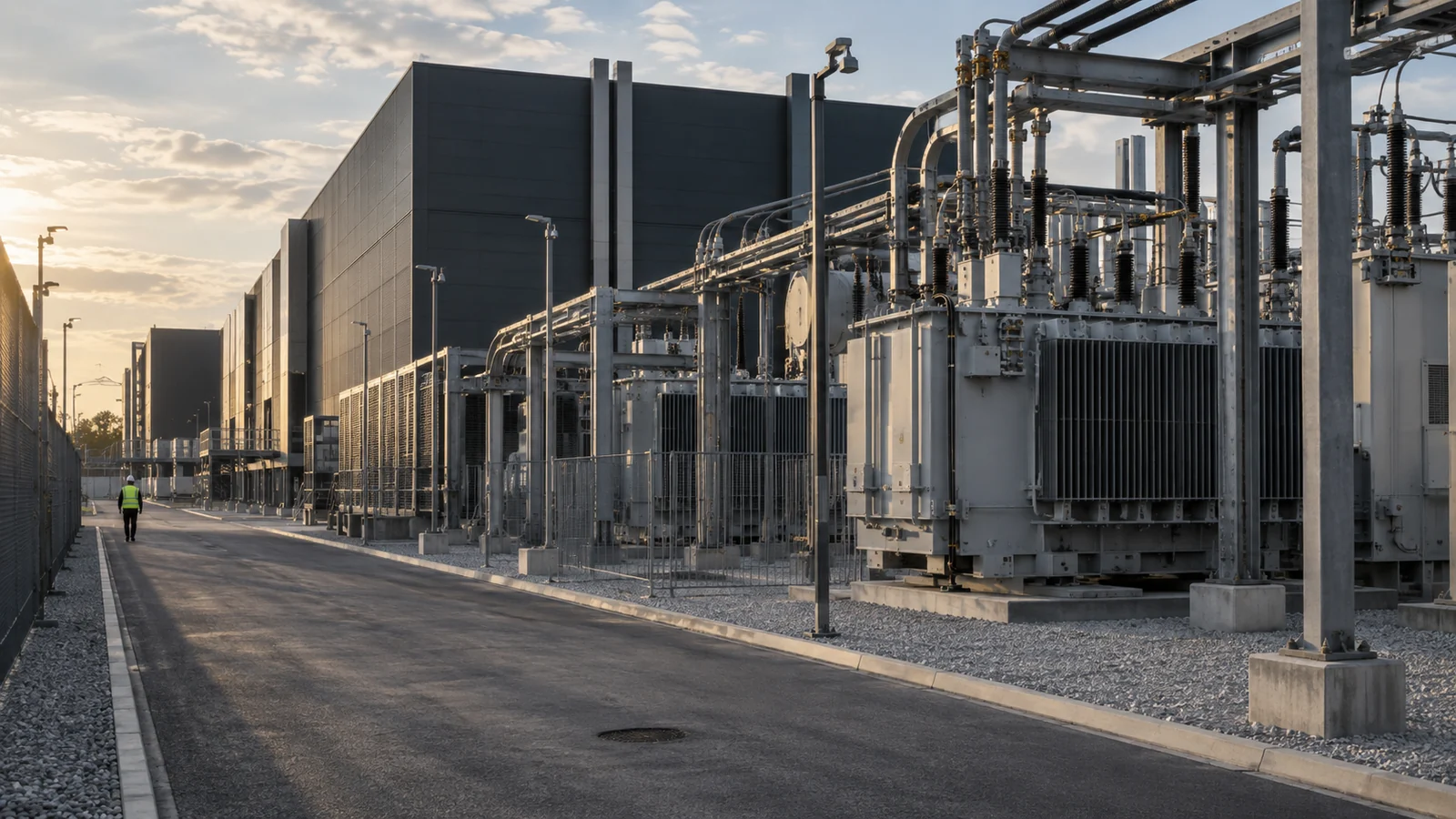
A cloud company that devotes its shareholder letter to land and electricity is telling you where its next constraint sits.
In its Q2 2026 shareholder letter, Nebius reported $574.9 million in AI cloud revenue, up 514% from a year earlier. It also raised its year-end target for contracted power to 5 GW. That second figure deserves attention. Contracted power represents commitments for future capacity, not five gigawatts of servers already humming away. Even so, the ambition shows how closely selling AI compute now depends on securing energy infrastructure.
The next wave of AI infrastructure spending will reach well beyond chipmakers. Grid equipment, cooling, storage and electricity generation all have a claim on it. Small nuclear reactors have a particularly interesting proposition for customers who need dependable power, want low operational emissions and cannot build their business around the weather.
They also have a particularly unforgiving delivery schedule. A data center customer may need power before a reactor developer has finished its licensing work.
That tension is where the business opportunity, and much of the investment risk, begins.
Governments are joining the queue for compute
Private AI companies are only part of the demand story. Governments want access to computing infrastructure they can trust, control and use for their own institutions. Sovereign AI makes the location of servers, their operators and the rules governing their use part of national infrastructure policy.
China provides a sense of the scale. In July 2026, its National Development and Reform Commission said computing power networks were expected to attract 4 trillion yuan in new direct investment during 2026 to 2030. The same announcement explicitly said this development relies mainly on enterprise investment. It is an economy-wide investment expectation under a national policy programme, not a 4 trillion yuan government purchase order.
Europe is pursuing its own capacity. On 30 July 2026, the European Commission announced a call for up to seven AI Gigafactories, supported by up to €10 billion in EU and national funding, with at least €20 billion in private investment expected to follow. The planned users include public authorities alongside businesses and researchers. Training, inference and fine-tuning are all within scope.
For a government, that infrastructure can support research, public administration and sensitive workloads whose data cannot simply be sent to whichever cloud is cheapest this week. For energy suppliers, it adds another set of prospective customers with demanding requirements for continuity and security.
The geography still matters. Chinese investment does not automatically become revenue for an American reactor developer. Domestic procurement, export controls, local licensing and fuel supply determine who can serve each market. These figures establish the breadth of the computing buildout. They are not interchangeable sales pipelines.

Follow the electricity bill
The International Energy Agency's updated 2026 outlook projects global data center electricity consumption rising from 485 TWh in 2025 to 950 TWh in 2030. Consumption at AI-focused facilities is expected to triple over that period. All data centers together would account for around 3% of global electricity demand by 2030.
Three percent sounds manageable until several large facilities want to connect to the same local grid.
A useful way to understand the opportunity is to follow the purchasing sequence. A cloud operator secures a customer, reserves a site and orders equipment. The project then needs a connection date, transformers, cooling and dependable electricity. A delay in any of those can leave expensive computing equipment waiting to earn revenue.
New nuclear capacity could eventually address part of that constraint. Compact plants offer the prospect of substantial, steady generation near demand. Factory production could also make repeated projects easier to deliver, if developers establish a repeatable design and an economical supply chain.
For near-term capacity, operators are already pursuing other options. Nebius said it partnered with Bloom Energy in May to deploy behind-the-meter fuel cells during 2026. That is a practical reminder that customers buy electricity on a deadline. They cannot suspend construction while a preferred technology matures.
Utilities, electrical equipment manufacturers and cooling suppliers may capture spending long before a new reactor produces its first commercial kilowatt-hour. Our broader AI infrastructure stocks analysis examines those other parts of the investment chain.
A small reactor is not necessarily a mobile reactor
Two different ideas often get bundled into the same investment pitch.
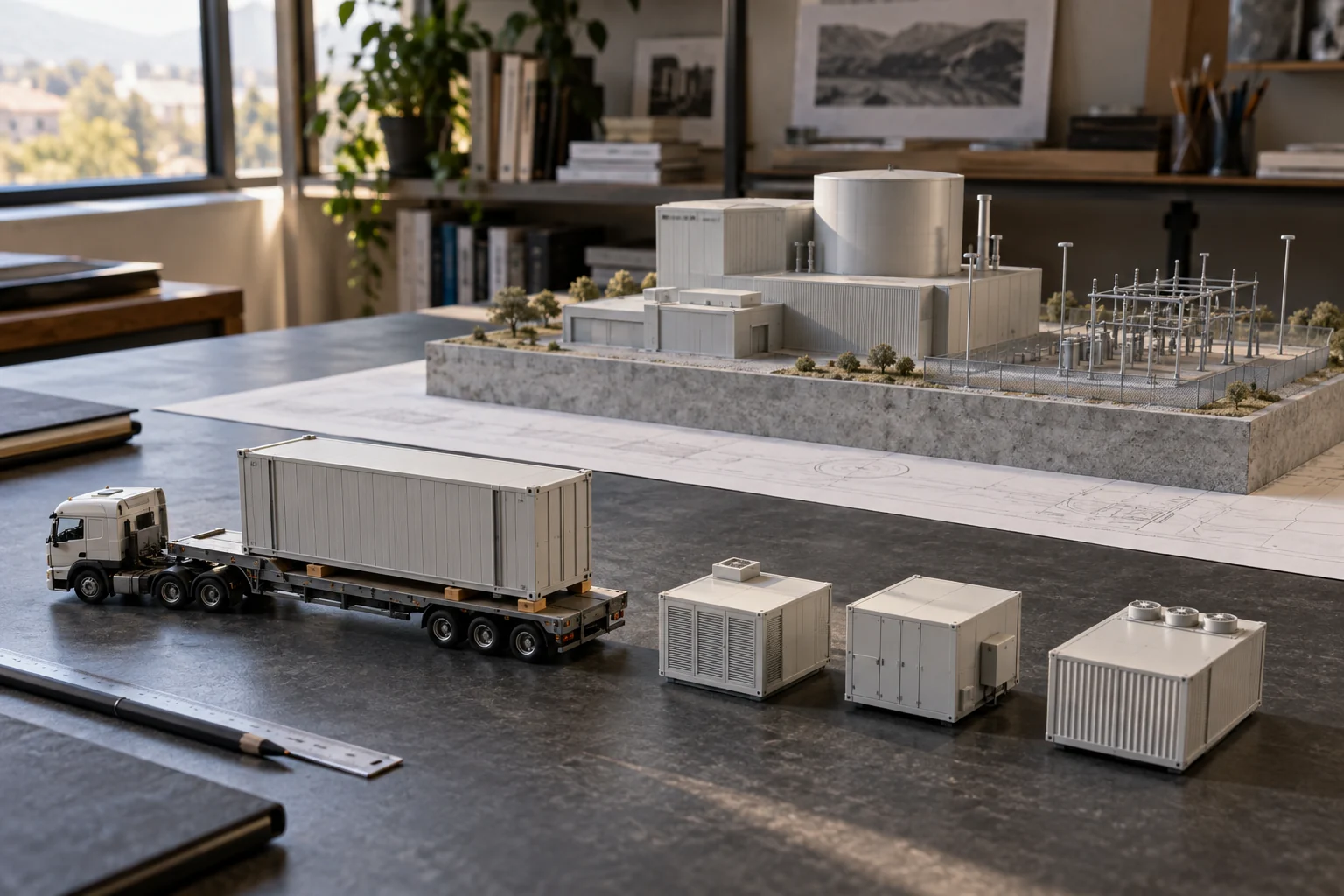
A transportable microreactor is designed to move between locations, usually in modules. A small modular reactor, or SMR, may use factory-built components while remaining a permanent power station once installed. Transportable equipment still requires an authorised site, security, fuel arrangements and operating procedures. Nuclear power does not become a rental generator because somebody puts it in a container.
The four listed companies below cover both categories. Their maturity varies considerably. None should be read as an off-the-shelf answer to every data center's immediate power shortage.
| Company | Ticker | What to distinguish | Milestone worth following |
|---|---|---|---|
| BWX Technologies | NYSE BWXT | Established nuclear manufacturer building the transportable Pele prototype | Delivery and demonstration testing |
| Oklo | NYSE OKLO | Stationary advanced reactors and a power-sales business model | Licensing, fuel and delivery of contracted development plans |
| NANO Nuclear Energy | Nasdaq NNE | Lead KRONOS project plus portable reactor designs in development | Research-reactor review and prototype execution |
| NuScale Power | NYSE SMR | Stationary modular light-water reactor technology | Financed projects and definitive customer agreements |
BWXT has a government customer and a factory floor
BWX Technologies is the most direct example here of transportable nuclear hardware moving through production.
Its Project Pele prototype is designed to deliver at least 1.5 MW of electricity, with the reactor and power systems fitting into four standard 20-foot containers. The US military programme targets applications where reliable power and fuel logistics matter. BWXT reports that initial-core fuel production finished in November 2025 and core stacking was completed in June 2026. Shipment to Idaho National Laboratory and demonstration testing are subsequent steps.
Pele is a prototype, not an operating commercial fleet. Its output also places it in a very different category from a hyperscale campus requiring hundreds of megawatts.
BWXT brings an established nuclear manufacturing and fuel business to the opportunity. That gives investors exposure to work already being performed, alongside potential demand from advanced reactors. It also means BWXT is not a pure bet on AI data centers. Government programmes, existing customers and manufacturing execution remain central to the business.
Watch whether successful demonstration turns into repeat orders, and whether wider reactor deployment creates profitable component and fuel demand. Those are stronger commercial signals than a growing collection of project announcements.
Oklo connects the nuclear thesis directly to a data center customer
Oklo's agreement with Meta makes the demand link unusually explicit.
The companies announced support for a planned 1.2 GW nuclear power campus in Ohio, including a mechanism for Meta to prepay for power and fund development. The first phase is targeted for as early as 2030, with the full planned capacity reached incrementally by 2034. These are project targets, not generating capacity available today.
Oklo intends to own and operate its powerhouses and sell electricity. That model could generate recurring revenue if the company delivers functioning plants at viable costs. It also leaves substantial development, financing and operating responsibilities with the company.
Its regulatory progress needs reading carefully. Oklo's current regulatory status describes an initial facility proceeding through the Department of Energy authorisation route, with conversion to an NRC commercial licence intended. Progress in fuel facilities or isotope production should not be mistaken for an operating commercial Aurora power plant.
The decisive questions concern fuel, approvals, construction costs and the timing of paid electricity delivery. A committed customer helps. It does not remove those steps.
NANO Nuclear offers earlier-stage exposure
NANO Nuclear's name can suggest that every project in its portfolio is a portable power unit. Its current priority is more specific.
The company's latest quarterly filing identifies KRONOS MMR as its lead development programme. ZEUS and LOKI include portable reactor concepts, but their development schedules and commercial readiness should not be inferred from progress on KRONOS. The company targets commercial reactor launches in the 2030s, beginning with KRONOS in the early part of that decade.
The University of Illinois submitted a construction-permit application for a KRONOS research reactor in March 2026. The NRC accepted it for review in May. Its published review schedule targets a final safety evaluation in September 2027. Acceptance for review is a meaningful procedural milestone, not a construction permit or commercial operating licence.
For investors, this is primarily a development-stage proposition. Successful licensing and demonstration could materially change its commercial prospects. Delays, additional financing and shareholder dilution could change the outcome in the other direction. Track the progress of each reactor separately rather than treating the portfolio as one product approaching delivery.
NuScale brings an approved design to a commercial financing test
NuScale's reactors belong to the stationary SMR category. Each module is designed to generate 77 MW of electricity. The NRC completed its review of the six-module, 462 MW US460 design in May 2025. A design approval does not itself authorise construction and operation at a customer's site.
The commercial questions are now especially important. In its August 2026 results, NuScale said partner ENTRA1 was continuing discussions with the Tennessee Valley Authority towards a definitive power purchase agreement. It also described work to satisfy conditions attached to advancing the six-module RoPower project in Romania.
Those projects connect the technology to utility-scale demand and Europe's search for additional generation. They should still be assessed through financing, customer commitments and site-specific approvals.
For shareholders, the next important change would be evidence that approved technology can become repeatable, economically attractive projects. Technical progress and commercial progress belong in separate columns until contracts and construction bring them together.
Could growing power demand lift these stocks
Yes, there is a plausible mechanism. Large electricity customers can support long-term revenue through power purchase agreements. Prepayments or development funding can reduce a project's financing burden. Government demonstration programmes can help establish operating evidence. As uncertainty falls, investors may assign a higher value to a company's future cash flows.
Whether that creates a good return from today's share price is a different calculation.
There are four useful checks before turning an infrastructure trend into an investment decision.
- Read the actual customer commitment. A memorandum, a development agreement and a binding power purchase agreement create different obligations.
- Match the power delivery date to the customer's need. A reactor planned for the 2030s cannot solve a capacity shortage next year.
- Count the capital still required. Include fuel, licensing, construction, financing costs and potential new share issuance.
- Test the valuation against slower delivery. A strong market can coexist with a disappointing stock return if the purchase price already assumes success.
The companies could also lose business to alternatives that arrive sooner or cost less. Better computing efficiency, weaker AI spending or local opposition could reduce or delay demand. This is a sector watchlist, not a recommendation to buy these shares.

Why Amalgama is following the infrastructure decisions
For a large enterprise, AI infrastructure choices eventually surface in ordinary business questions. Can the service operate in the required jurisdiction? Will capacity be available when rollout begins? What happens to cost and continuity when usage expands?
At Amalgama, we are analysing the moves of leading cloud, compute and energy companies because those decisions will shape the options available to our enterprise clients. We will pursue partnerships with relevant infrastructure providers and specialist teams to help solve large-scale client requirements, including capacity, data residency, operating resilience and the economics of production AI.
That work starts with a client's actual workloads. Some will fit established cloud services. Others may need dedicated infrastructure or local AI running on company data and processes. Energy and nuclear engineering require qualified specialist partners. Our role is to connect those capabilities to a business requirement and a workable implementation plan.
The cloud has spent years teaching businesses to think in subscriptions. Its next lesson may arrive as a very large electricity bill.