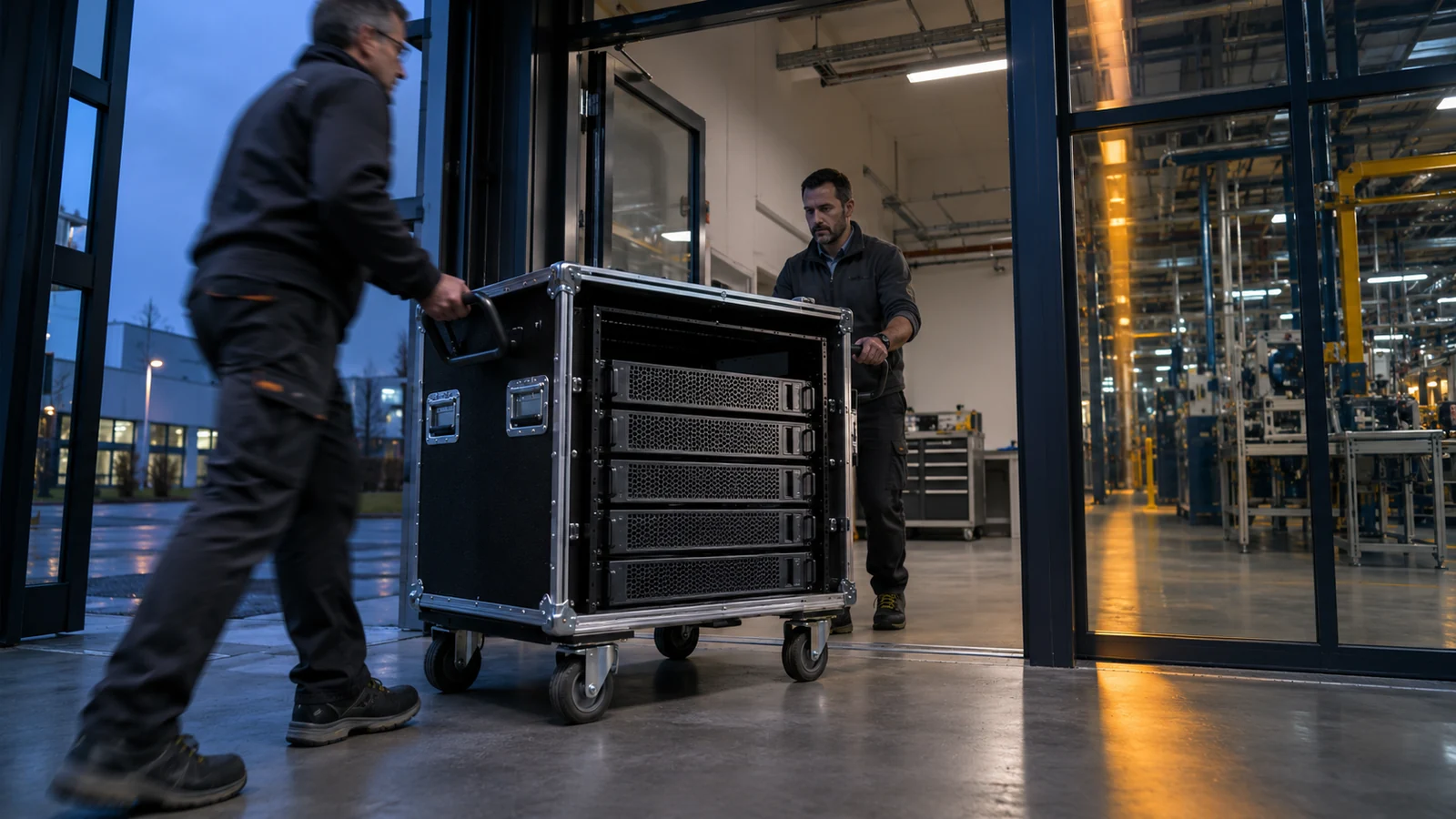
Buying the servers puts the hardware on your premises. How much of the workflow could you still run if the model supplier left?
Suppose a group CFO gets the price cut she wanted from her AI supplier. Before she signs, she asks the head of operations a question. “If these terms change next year, how long would it take us to leave?” The notice period is right there in the contract. What she wants to know is whether the subsidiaries that rely on the model to clear invoices could still pay their suppliers on Friday.
That's why I expect large companies to move their predictable work to private AI inference. They can run a model on hardware they own or rent, and choose when to switch. The first wave of API spending bought them a cheap way to find out what AI could do. A few years into a successful deployment, the purchase looks different. The company has supplied the documents, resolved the exceptions and taught the system what counts as a good decision. It pays by the token to exercise a judgment it has spent its own money making reliable. Eventually, somebody on the board will ask which part of that judgment the company can take with it.
Which decisions can you take to the next model?
I led the IT side of a document workflow implementation for a corporate executive office. The wider project covered subsidiary processes, system architecture and the requirements we put out to tender. One question from that kind of work matters just as much for AI. If head office issues a policy on Friday and a subsidiary signs an amendment on Monday, whose instruction applies to Tuesday's payment?
A language model can read both documents. The authority to decide between them belongs to the company. So do the permissions, the effective dates and the record of what happened the last time the two instructions conflicted. Multiply that by several acquisitions and a decade of exceptions. You have a considerable corporate asset, much of which may exist only in the heads of the people who close the books.
An enterprise making that knowledge usable for AI has a choice about where to put it. Keep the approved documents, retrieval rules and a set of past cases with signed-off answers in a system the group controls. Its retrieval-augmented generation layer can then give two competing models the same evidence. For finance, that's a practical test of model portability. Run last month's invoices through both systems and inspect the decisions that change. If the only working copy of those rules lives in one provider's hosted assistant, the exit project starts with reconstructing the company's own procedures. How to connect a local model to company documents and workflows
Now consider the calendar. Anthropic publishes retirement dates for Claude versions. A group using one of those versions may have to revalidate an accounts payable workflow on the supplier's timetable. With locally deployable, licensed model weights, the group can hold a validated version through its year-end close and schedule the change for January. It also takes responsibility for supporting that version. For a finance director, the right to choose the week can be worth more than a discount. Claude model retirement policy
Who can restore access before Friday’s payment run?
Signing in to Claude with Google proves you control the Google account. Anthropic can still ask you to show who is behind it. For some users, its verification partner Persona asks for a government photo ID and a live selfie. Anthropic says Persona holds the images and that Anthropic can review verification records when handling an appeal. How Claude verifies identity
In November, one subscriber described paying $18, sending a few messages and losing access after verification failed. They took the refund request to Fin, Anthropic’s AI support bot, and followed up by email. They said Anthropic refused. Another subscriber whose driving licence was rejected later reported getting a refund through Google Play. Anthropic says Fin can hand cases to a specialist. For someone who has already paid and cannot work, how long that takes matters. First subscriber’s account · Google Play refund account · Anthropic’s support process
One dispute has already reached court. In a proposed class action, José Enrique Ortiz Colon says he had to photograph his driving licence and submit a live image of his face in Chicago to regain access to Claude. He alleges that Anthropic failed to tell him in writing how long it would keep his biometric data. Anthropic moved the case to federal court on November 13. Complaint, paragraphs 25 to 30 · Federal docket
Those subscribers were using personal accounts. At an enterprise renewal, I’d ask the finance team to rehearse a Friday close with the hosted assistant unavailable. Can the controller retrieve the signed amendment, check the amount and release the payment while the administrator waits for a reply? That exercise puts a price on the right to keep working.
A holding company can buy capacity differently from a subsidiary
A single subsidiary may never have enough work to justify a dedicated machine. At group level, the demand curve can look quite different. Customer correspondence arrives in working hours. A document backlog can run overnight. Subsidiaries in other time zones can use the same capacity when their data rules allow it. The CIO who sees all three queues may be able to buy a useful block of computing time that no division could justify on its own. If every subsidiary closes its books at once, the opposite happens. A monthly average will hide the most expensive afternoon of the quarter.
This is where specialised AI hardware changes the terms of the decision. An engineering team can test open-weight models on a desktop AI system with its own documents, then benchmark the same workload on a production GPU server. Owning the servers is one option. Renting a dedicated cluster from a specialist such as Arkady Volozh's Nebius is another. In either case, the group can pay for compute and decide which model runs on it. I would replay the busiest afternoon with one machine unavailable before committing to either contract. Example of dedicated inference infrastructure
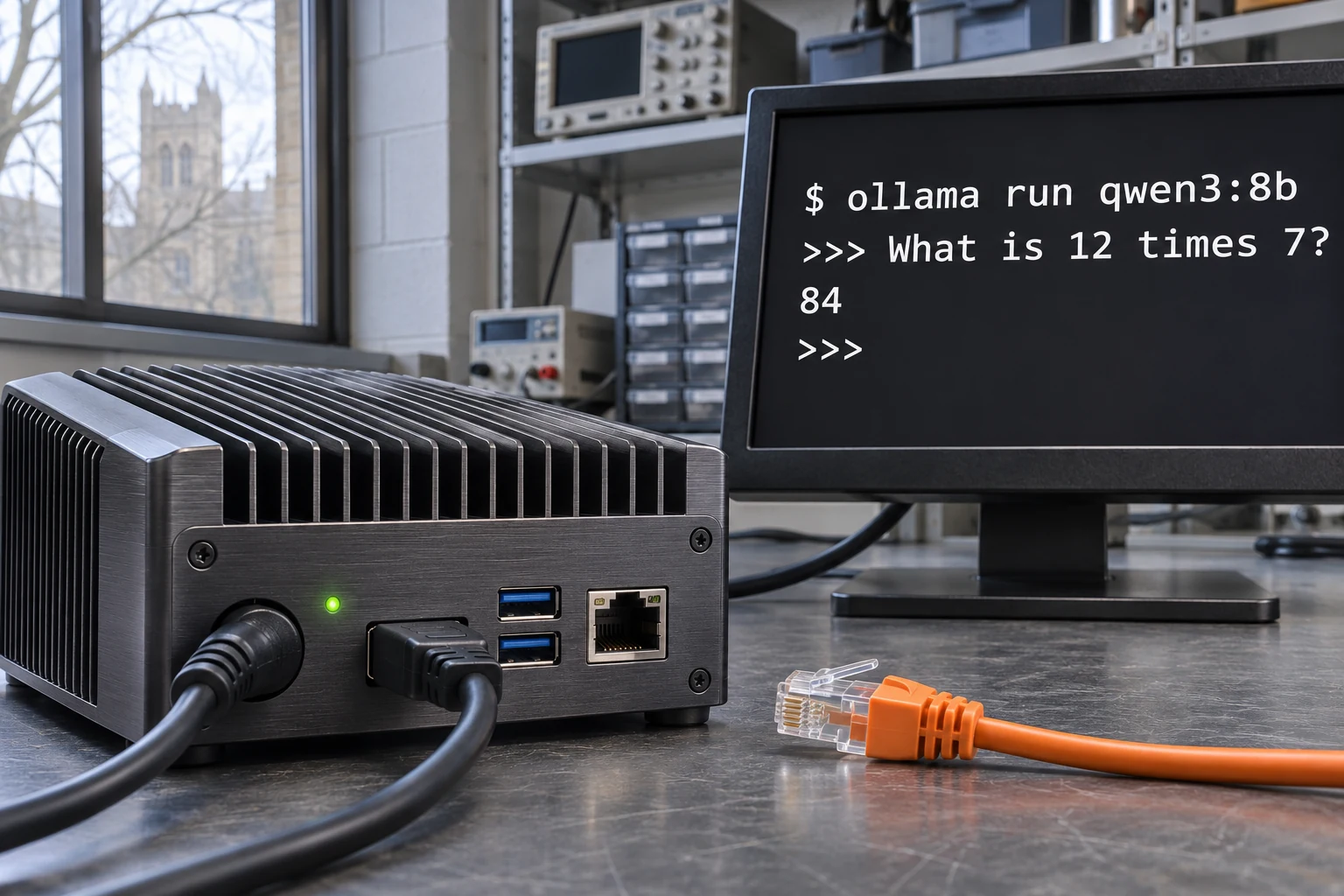
Once the model weights are on the machine, it can answer a prompt offline. The harder test is whether finance can finish a payment run when the external API is unavailable.
Local operation also changes what the security team can demonstrate. It can keep a borrower's file, the passages retrieved from it and the inference logs inside a defined boundary. That promise is only as good as the outage plan. When the private cluster fills up, does the file wait, go to an authorised reviewer or get sent to an external API? If nobody has specified the answer, the decision about data residency has quietly been left to whoever configures the fallback.
When does a self-hosted LLM cost less than an API?
Consider one recurring job. A supplier sends an invoice with payment terms buried in a scanned amendment. The model extracts the terms, the accounting system checks the numbers and a controller handles discrepancies. Use the same accuracy target and deadline for both routes. Then count every retry and every minute of review in the cost per completed case.
Suppose the API route costs eight cents per completed case after discounts, retries and review. A private deployment costs $24,000 a month for capacity, operations and failover, plus two cents per case for the remaining variable costs, including review and any external calls. These are illustrative assumptions. The calculation holds only for volumes the reserved cluster can actually handle.
| Completed cases per month | API route | Private inference |
|---|---|---|
| 100,000 | $8,000 | $26,000 |
| 400,000 | $32,000 | $32,000 |
| 800,000 | $64,000 | $40,000 |
Break-even is 400,000 cases a month. Now suppose the private model makes just enough extra mistakes to add three cents of reviewer time per case. Break-even doubles to 800,000. Before approving the GPUs, I'd spend an afternoon with the controller who clears that queue. The number that decides the investment may be in her working day, nowhere on the AI invoice.
What OpenAI and Anthropic will still get paid for
The first invoice after an acquisition is a different purchase. The supplier uses unfamiliar terms, the purchase order sits in a system headquarters has never seen, and nobody knows what “adjustment 14” means. I'd willingly pay for access to a frontier model if it helps an analyst untangle that case. By the millionth invoice, the group should have learned something it can reuse.
My forecast for 2027 is that larger groups running repeatable workflows will start putting a second bid on the table at renewal. Their own platform team will quote a price per completed case and commit to a recovery time. The revealing moment will come when procurement asks both bidders to price the month-end peak and finance asks who pays for the exceptions.
By 2029 I expect some of those groups to reserve external model budgets for work where an outside supplier keeps earning a premium. A supplier might receive fewer calls and still earn more on a hard case. The company, meanwhile, will be able to move routine volume when prices rise, a model is retired or a region loses service. The test I'd put before the board is simple enough to run today. Pick one subsidiary. Ask it to close a week's worth of work on a second model. Record what breaks, what it costs to fix and who has the authority to approve the switch.
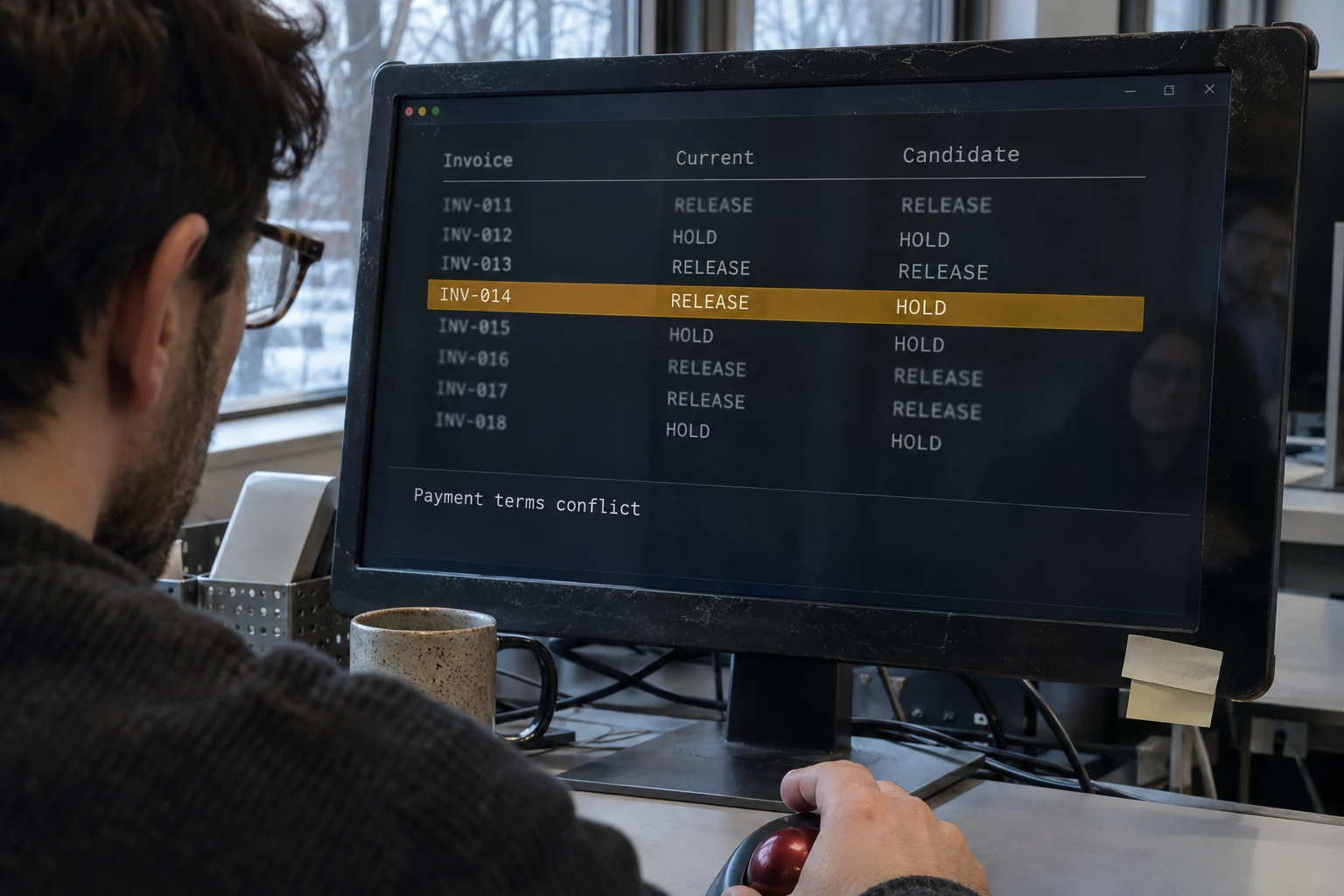
In this sample replay, one model would release invoice 014 and the other would hold it. Finance can trace the difference before switching a live payment run.
If an external API still clears that work more cheaply and reliably after the test, sign the renewal. Now the CFO can answer her original question.
I've helped dozens of large companies improve how they run projects and operations. If your AI bill is coming up for renewal, bring Amalgama one month's spend and the volume of one recurring workflow. We'll work out which calls are worth paying for and what it would cost to take the rest in-house. Talk to Amalgama